Key Takeaways
- A $500 industrial motor produced a reported $700 in copper value and $230 in steel value.
- Investment return after teardown 86%.
- Splitting the stator in half made it much easier to remove the copper windings.
- The reported $430 profit does not remove the need to consider labor, tools, transport, and local scrap prices.
- Large motors can be profitable scrap, but purchase price and recoverable metal content decide the outcome.
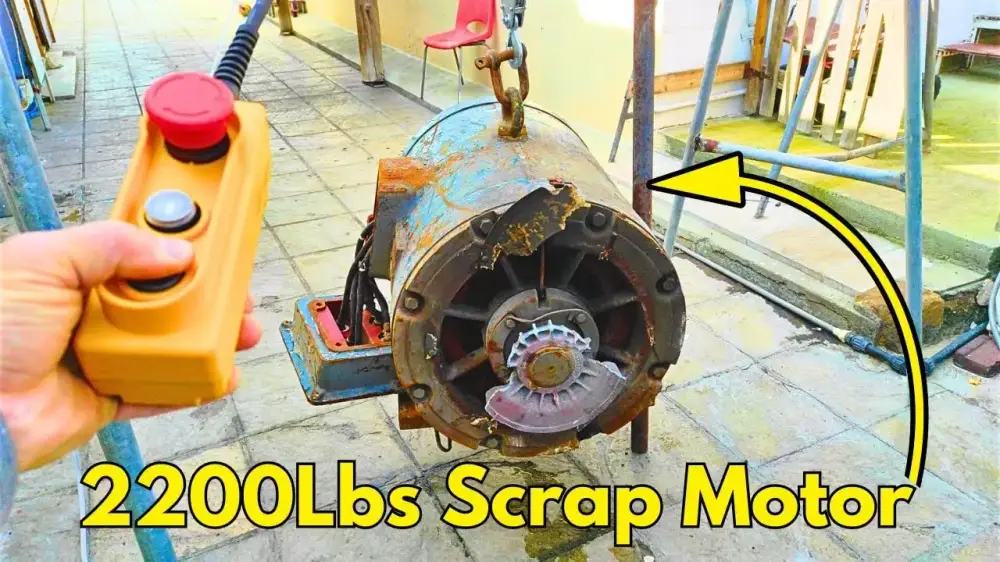
Could a giant industrial electric motor really turn into cash, or would it become a very heavy, very rusty lesson? I bought this motor for $500 to find out. The plan was simple: break it down, separate the valuable metals, and see whether the copper and steel were worth more than the purchase price.
What I found was a serious amount of material, a lot of hard work, and a final result that proves scrap flipping can pay, but only when I treat the numbers honestly.
Table of Contents
- The Scrap Motor Bet
- What Is Inside a Large Electric Motor?
- My Electric Motor Breakdown Process
- The Real Lesson: Scrap Profit Is Not Just Metal Value
- Final Weigh In: Did This Electric Motor Make Money?
The Scrap Motor Bet
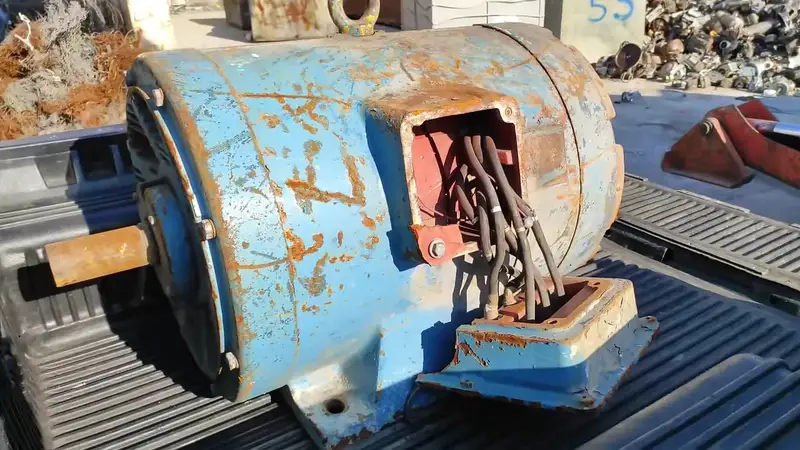
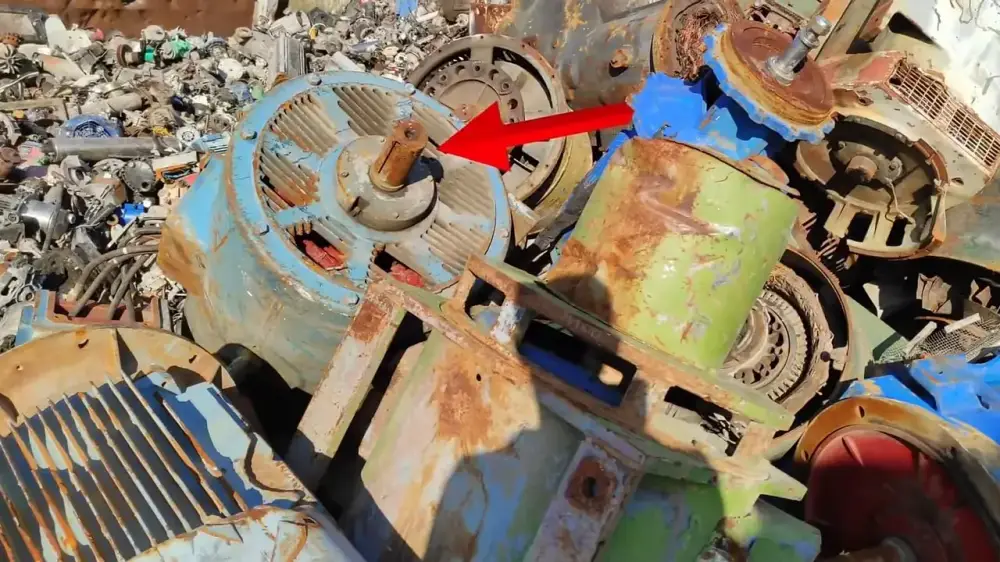
The target was an old industrial electric motor sitting among piles of scrap. Motors are interesting because their stators contain copper windings, while the housing, rotor, and other heavy components contribute steel value.
That does not mean every motor is automatically a good buy. The real question is whether the likely copper content, steel weight, transport, tool wear, and labor add up to a worthwhile return.
| Item | Reported Value or Cost | Why It Matters |
|---|---|---|
| Purchase price of motor | $500 | This was the upfront risk. |
| Recovered copper value | $700 | Copper windings were the main value driver. |
| Recovered steel value | $230 | The heavy casing and remaining ferrous parts still mattered. |
| Reported total profit | $430 | Calculated from recovered metal value less purchase cost. |
The simple calculation was $700 in copper plus $230 in steel, minus the $500 motor cost, for a $430 profit (86% increase). But that is a scrap profit calculation, not a complete business accounting statement. My hours, electricity, transport, and long term tool costs still matter.
What Is Inside a Large Electric Motor?
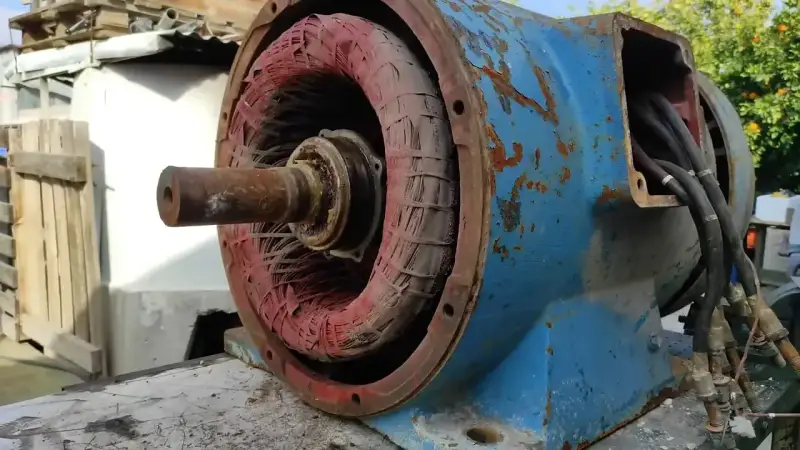
The motor had several major sections that needed to be separated before I could reach the copper efficiently:
- Steel outer case: the large housing around the motor.
- End covers and hardware: bolts, covers, bearings, and heavy steel parts.
- Rotor: the long central rotating assembly, which also had some copper recoverable from its components.
- Stator: the stationary ring packed with copper windings.
The stator is the prize. It is the large circular core wrapped in tightly packed copper coils and insulation. That copper is why old electric motors can be far more valuable than ordinary mixed steel scrap.
My Electric Motor Breakdown Process
Breaking down a motor this size is not a quick job. It involves heavy lifting, seized hardware, cutting, and a lot of patience. I started by removing the accessible bolts and covers. Thankfully, the bolts came out easier than expected, which saved plenty of frustration.
1. Remove the End Covers and Hardware
The first goal was to open the motor without damaging the valuable internal sections unnecessarily. I removed screws, covers, bearing components, cables, and loose attachments until the motor structure was exposed.
2. Pull the Rotor
The rotor was a monster. Because of its size and weight, I used a hoist to lift it safely from the motor body. Once it was out, the stator could be accessed properly.
I also inspected the rotor for smaller copper bearing pieces. When scrap values are tight, ignoring recoverable material is the fastest way to lose the profit margin.
3. Remove the Steel Casing
With the rotor gone, I worked on removing the heavy steel housing around the stator. This is the point where the project starts to look less like an electric motor and more like a giant copperfilled ring.
4. Split the Stator Instead of Fighting Every Winding
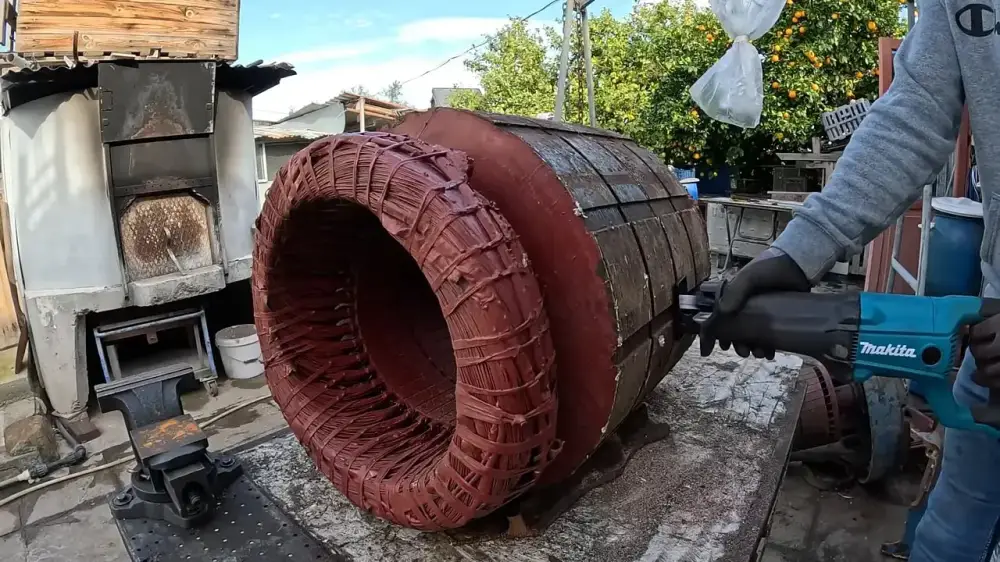
This was the key move. Rather than cutting off just one end of the copper windings and trying to pull everything out the hard way, I split the stator in half with a reciprocating saw.
Once the stator was divided, the copper came out far more easily. I used a 30 cm Milwaukee blade for the splitting and removal work. Good tools cost money, but cheap tools can cost more when they fail after only a few uses.
I prefer practical solutions. An angle grinder or plasma cutter can be useful, but a hammer can often be faster, cheaper, and more satisfying when the job allows it.
5. Cut the Copper Ends and Push Out the Windings
After splitting the stator, I cut the copper ends and used a steel piece sized to the rotor diameter as a pushing tool. That gave me a way to force the copper bundles out instead of trying to pull every section by hand.
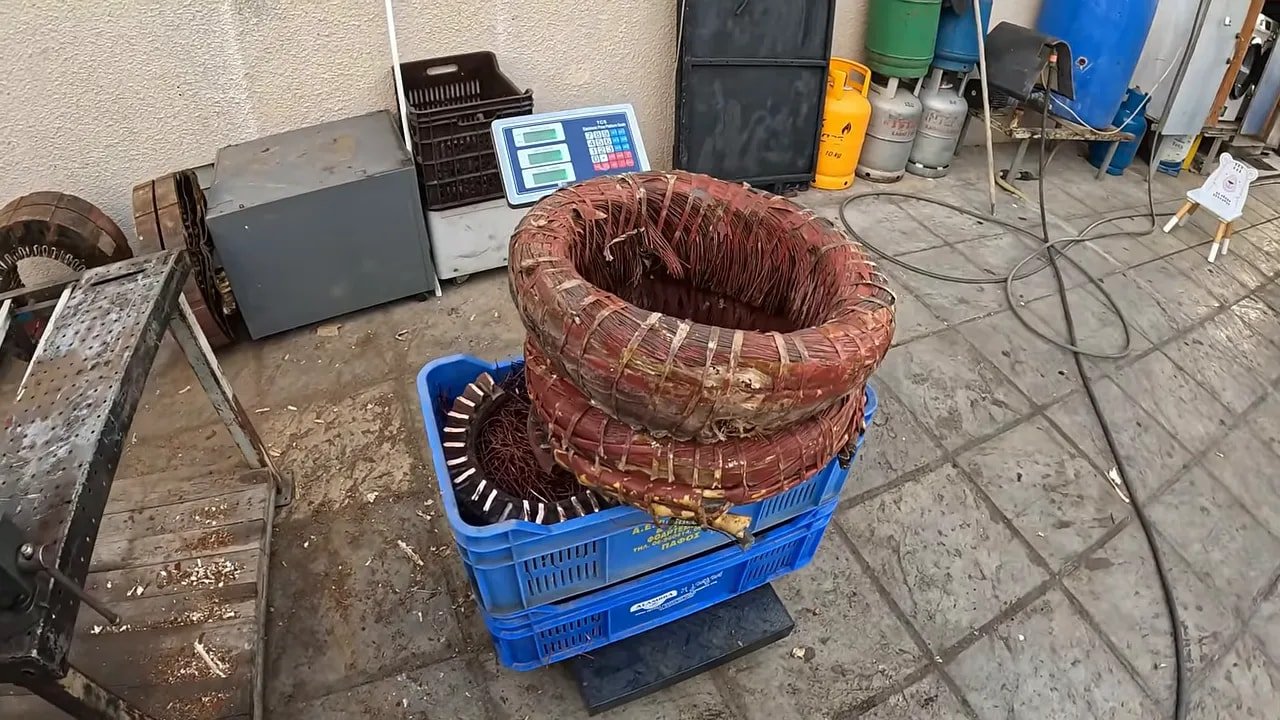
The result was a pile of copper nuggets and winding bundles ready to be sorted. These are not clean, bare copper wires yet. They still carry insulation and attached material, so their exact scrap category and price depend on the local yard.
For a broader explanation of why keeping valuable materials in circulation matters, the EPA electronics recycling guidance is a useful starting point.
The Real Lesson: Scrap Profit Is Not Just Metal Value
The final profit was exciting, but I would not call this easy money. It took lifting equipment, blades, saws, hand tools, workspace, experience, and plenty of labor. A different motor could have less copper, tougher bolts, damaged windings, or a purchase price that destroys the margin before the first cut.
Before buying a large electric motor for scrap, I would check these points:
- Buy price: Can the expected copper and steel realistically beat it?
- Motor size: Bigger can mean more copper, but also more handling difficulty.
- Condition: Rust, damage, and missing parts can change the material yield.
- Equipment: A hoist and durable cutting tools can make the job possible.
- Local scrap prices: Copper and steel values vary by location and grade.
- Time: If the work takes all day, the labor must be worth it to me.
Final Weigh In: Did This Electric Motor Make Money?
Yes. This motor produced a reported $700 in copper value and $230 in steel value. Against the $500 purchase price, the reported profit was $430 an 86% increase.
Would I do it again? Absolutely. But I would be smarter about what I buy next time. I would estimate the likely copper content before handing over money, consider how difficult the motor will be to dismantle, and make sure I have the right tools ready.
One persons scrap can absolutely become another persons profit. The trick is knowing that the money is not hidden in one dramatic discovery. It is built through careful buying, proper separation, durable tools, and the willingness to do the hard work.
Electric Motor Scrap FAQ
Are electric motors worth scrapping for copper?
They can be. Large electric motors often contain valuable copper windings (8-15% copper from total weight), but profitability depends on the purchase price, copper yield, steel value, tool costs, and the time required for disassembly.
What part of an electric motor contains the most copper?
The stator usually contains the main copper windings. Some motors also have smaller recoverable copper parts in the rotor and attached wiring.
Why split a motor stator before removing copper?
Splitting the stator creates an opening in the steel core, reducing the resistance holding the windings in place. This can make it easier to push the copper bundles out.
What was the reported profit from this motor?
The reported result was $430 profit, based on $700 in copper value and $230 in steel value minus the $500 purchase price of the motor.
Before tearing down another motor, use our scrap metal calculator to estimate the potential recoverable value and whether the processing time makes economic sense.