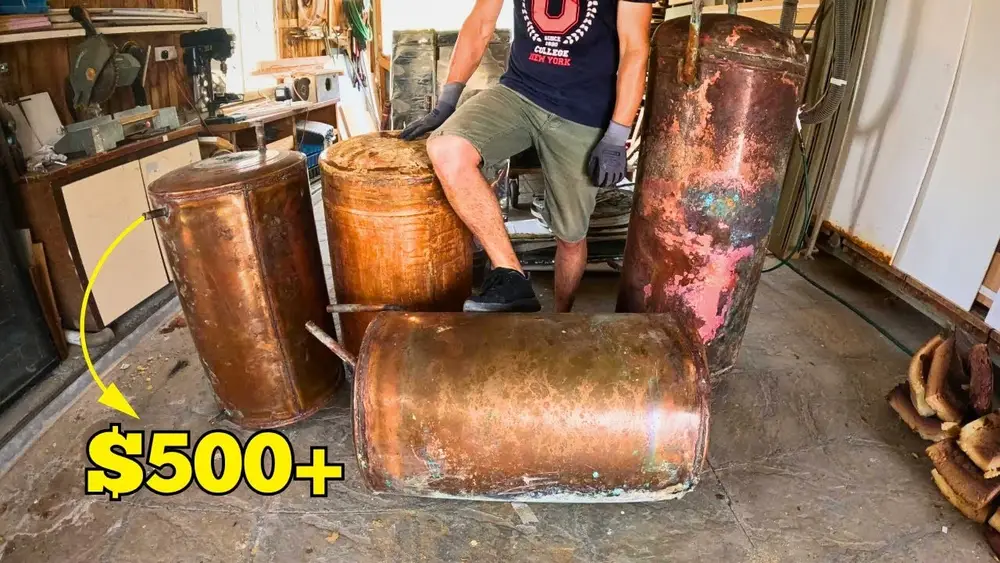
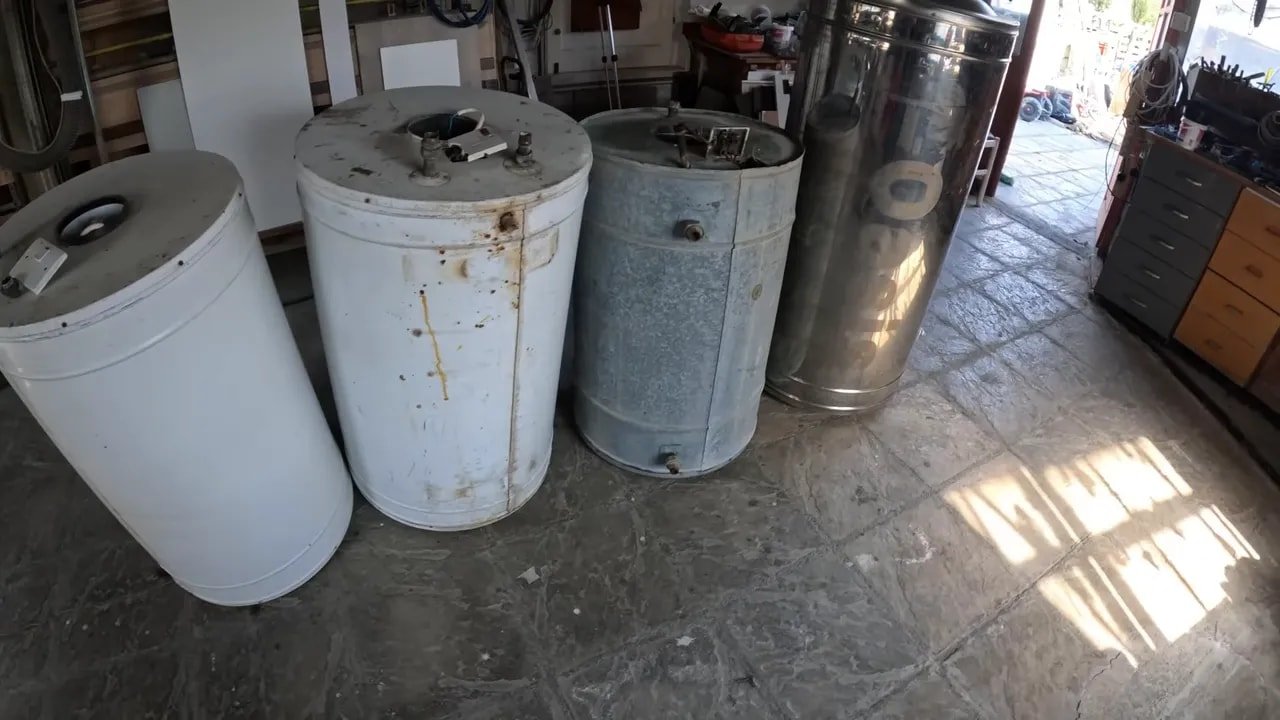
Four old water heaters looked like a rusty headache. Three hours later, they turned into a serious pile of sorted metal: 150 pounds of copper, 70 pounds of steel, 26.2 pounds of stainless steel, and 3.3 pounds of brass. At the scrap prices used for this haul, that came to $476 in recoverable value.
That is the kind of urban mining score that keeps me curious. The key was not simply hauling whole heaters to the yard. It was taking the time to identify the materials, separate them properly, and clean the copper tank enough to sell it as number two copper.
These were solar water heater storage tanks, which are very different from the ordinary steel tank water heaters most people encounter. A standard water heater often has a steel shell and steel tank. These units hid large copper tanks under their shells and insulation, making them far more valuable than they first appeared.
Key Takeaways
- Four free solar water heaters yielded 150 pounds of copper and $476 in total estimated scrap value.
- The copper storage tanks were the main value driver, while steel, stainless steel, and brass added smaller returns.
- Removing insulation and sorting each metal separately is essential for maximizing scrap value.
- The three hour teardown worked out to roughly $150 per hour using the haul’s recorded prices.
Table of Contents
- What Metals Are Inside a Copper Water Heater?
- A Simple Water Heater Scrap Sorting Workflow
- The Real Scrap Results From Four Water Heaters
- How to Get More From Future Water Heater Scrap
What Metals Are Inside a Copper Water Heater?
Before tearing into any water heater, I look for clues about what I am dealing with. The outer body alone does not tell the whole story. A stainless shell can be hiding copper inside, while a standard painted shell may cover a much less valuable steel tank.
A copper-tank water heater can contain several recyclable materials:
| Component | Likely Material | Why It Matters |
|---|---|---|
| Outer shell | Steel or stainless steel | Lower value than copper, but still worth separating by grade. |
| Inner storage tank | Copper on this haul | The main source of value in these solar water heaters. |
| Valves and fittings | Brass | A small quantity can add useful value when kept separate. |
| Heating element and wiring | Copper or mixed metal | Worth inspecting and sorting instead of tossing into shred. |
| Thermostat, dip tube, relief valve, anode rod | Mixed materials | These parts should be checked individually before scrapping. |
| Insulation | Polyurethane foam or fiberglass | Not a scrap metal category, but it must be removed to expose the tank. |
Solar water heating systems use collectors to absorb sunlight and turn it into heat, then store that heated water in a tank. That storage tank is exactly where the surprise can be. In this case, the insulation covered a tank made entirely from copper.
A Simple Water Heater Scrap Sorting Workflow
My approach is simple: get through the outer layers, expose the tank, then keep every metal stream separate from the beginning. Mixed scrap is easy. Clean, sorted scrap is where more of the value stays in my pocket.
| Step | Action | Material Stream Created |
|---|---|---|
| 1 | Remove the outside casing | Steel or stainless steel shell |
| 2 | Take off the lid, panels, fittings, and loose components | Brass, steel, stainless, and small mixed metal pieces |
| 3 | Strip away the foam insulation | Exposed copper storage tank |
| 4 | Remove remaining attached material from the tank | Cleaner copper suitable for a better grade |
| 5 | Weigh every sorted pile separately | An accurate scrap value calculation |
1. Remove the Outer Steel Shell
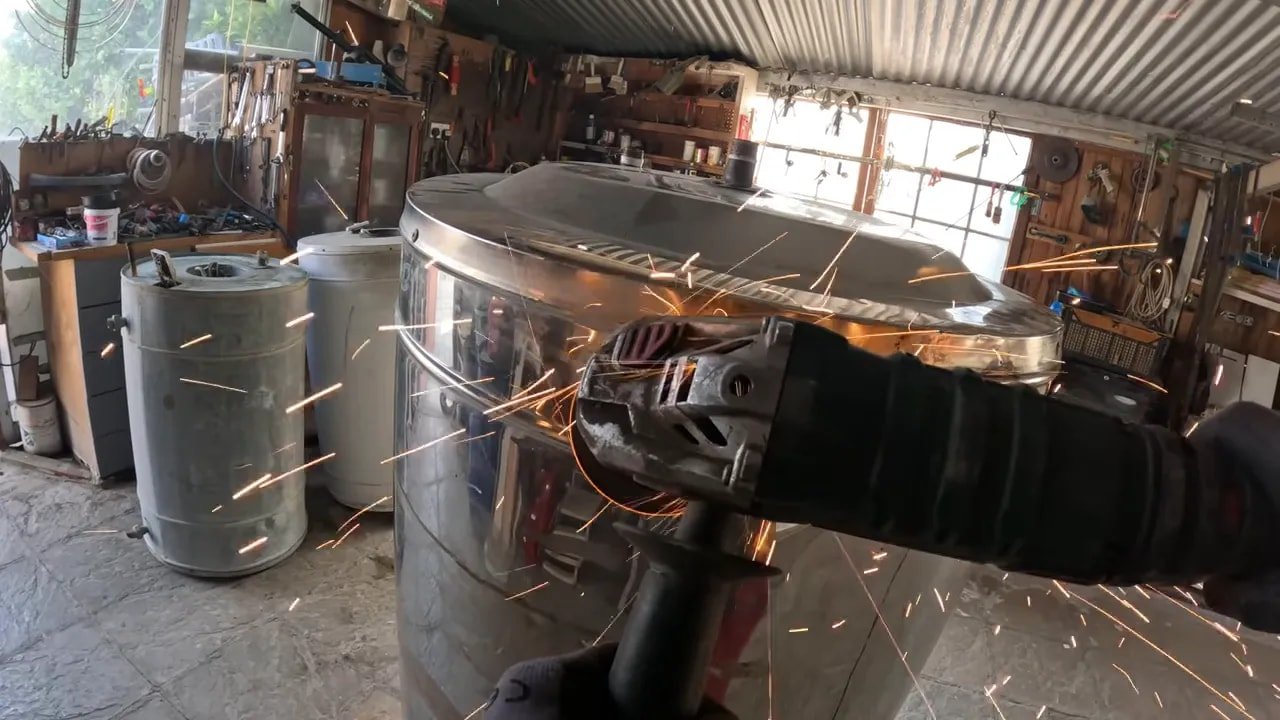
I used an angle grinder to cut the shell connections and remove the exterior panel. Most modern water heaters use relatively thin steel for the outer cover, around 24 gauge in many cases. It is not the prize material, but it belongs in its own pile.
On this haul, one unit had a stainless steel shell. That is why I never assume every silver colored water heater shell is ordinary steel. Separate it, weigh it, and price it correctly.
Once the shell is open, I can see the insulation and start assessing the real opportunity. This is the point where a water heater goes from mystery object to a stack of identifiable materials.
2. Remove the Insulation to Reach the Tank
The insulation on these units was polyurethane foam. Its job in service is to slow heat loss and keep water hot for longer. Its job during a teardown is much less glamorous: it has to come off.
After removing the shell, I peeled, scraped, and pried away the insulation until the copper tank was exposed. It took elbow grease, but the payoff was obvious. One 200 liter water heater was expected to yield about 70 pounds of copper on its own.
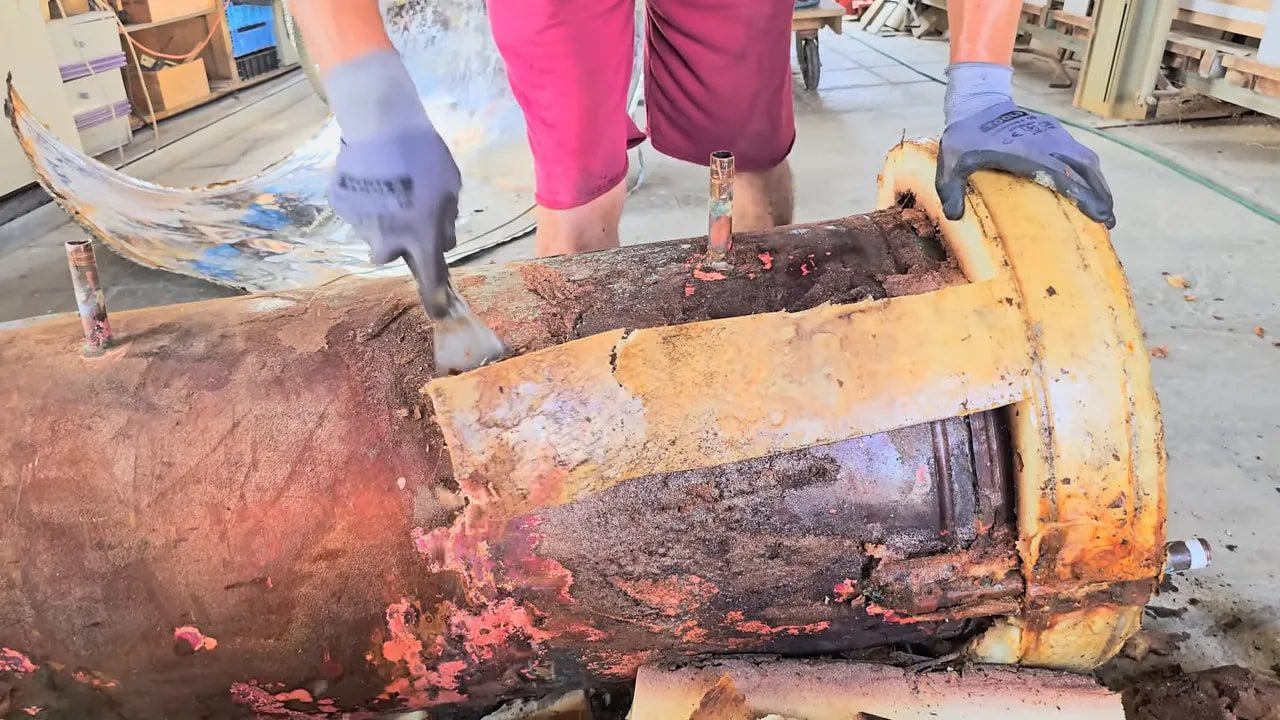
Not every tank will be copper, so do not treat every old water heater as a guaranteed jackpot. The best finds are the units where the tank material is confirmed before the heavy teardown work begins.
3. Clean the Copper Before It Goes to the Scale
After the foam came off, I kept cleaning the copper tank. The target was number two copper, which was around $3.35 (by the time you read this is way more) per pound at the time of the teardown. Copper that still carries insulation, paint, or excessive contamination can be downgraded, and that difference matters when the pile is this heavy.
A clean copper load can command a 10% to 20% premium over dirty or painted copper. That is why I do not rush the final prep. An extra minute spent removing attached junk can be worth more than the minute spent.
The practical rule is simple: separate first, clean what is practical, then confirm how your local yard grades material before you spend hours chasing a marginal upgrade.
The Real Scrap Results From Four Water Heaters
After processing all four heaters using the same method, I weighed each sorted category on a digital scale. Copper dominated the load by a huge margin, which is exactly why identifying the tank material early is so important.
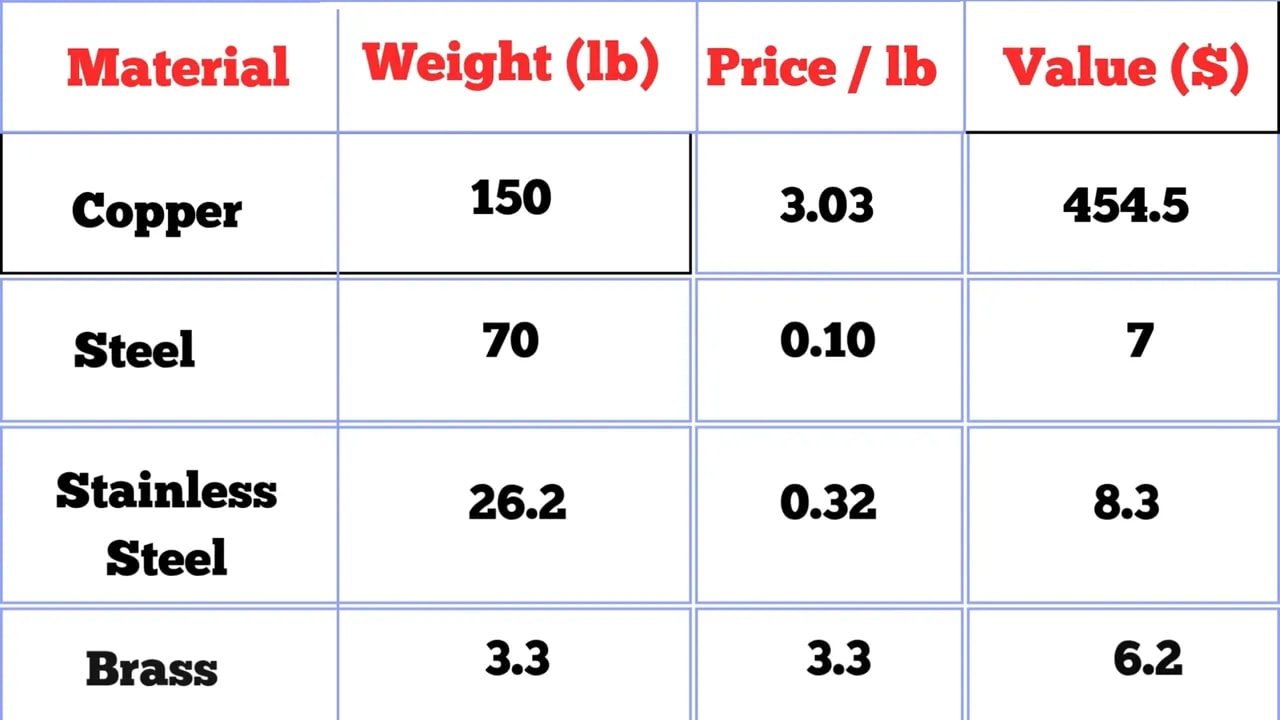
| Material | Weight | Price Used Per Pound | Estimated Value |
|---|---|---|---|
| Copper | 150 lb | $3.03 | $454.50 |
| Steel | 70 lb | $0.10 | $7.00 |
| Stainless steel | 26.2 lb | $0.32 | $8.30 |
| Brass | 3.3 lb | $3.30 | $6.20 |
| Total | 249.5 lb | $476.00 |
For around three hours of work, that works out to roughly $150 per hour. The steel, stainless, and brass were worth separating, but copper made this score. More than 95% of the estimated value came from the 150 pound copper pile.
| Value Driver | What This Haul Proved |
|---|---|
| Material identification | A copper storage tank can change a water heater from low grade scrap into a valuable teardown. |
| Source cost | Getting all four units for free protected the margin. |
| Separation | Keeping copper, brass, steel, and stainless apart avoided selling everything as mixed scrap. |
| Cleaning | Removing insulation and contamination helped prepare the copper for a better grade. |
How to Get More From Future Water Heater Scrap
The biggest lesson is not that every water heater is worth hundreds of dollars. It is that sorting skills matter. The same heavy object can be sold as a low value mixed item or broken into clean, recognizable materials with much better value.
- Check before you commit. Look for signs of stainless construction, copper fittings, and unusual solar water heater designs.
- Build relationships with local scrapyards. Good yards can help explain grades, offer better options for bulk loads, and sometimes assist with loading and unloading heavy material.
- Keep metal categories clean. Copper does not belong with steel, brass does not belong in mixed shred, and stainless should not disappear into a ferrous pile.
- Weigh every category. A digital scale turns a rough guess into a real profitability record.
- Track the hours. Knowing the material value is useful, but knowing the return on your time is what tells you whether a teardown is worth repeating.
Copper recycling is a major part of the scrap ecosystem. The United States recycles more than 2 million tons of copper wire each year, and small scale collectors help keep recoverable metal moving back into the supply chain. Every properly sorted tank is one less valuable material stream lost in mixed waste.
That is the fun part of this work. Yesterday’s rusty equipment can still have a second life, and a little curiosity can reveal value that most people roll right past.
Frequently Asked Questions
How much copper came from the four water heaters?
The four water heaters produced a combined 150 pounds of copper.
How much was the water heater scrap haul worth?
Using the recorded prices for copper, steel, stainless steel, and brass, the total estimated value was $476.
What made these water heaters unusually valuable?
These were solar water heaters with copper storage tanks hidden beneath the outer shells and polyurethane foam insulation.
Why should copper be cleaned before selling it?
Clean copper can earn a 10% to 20% premium compared with dirty or painted copper, so removing insulation and contamination can improve the payout.