Key Takeaways
- Scrap electric motor price (as is) $0.50 per pound (see scrap electric motors price).
- Processing 22 electric motors produced $328.64 in sorted scrap value over 4 hours and 8 minutes.
- The calculated production rate was about $80 per hour, above the roughly $37.50 hourly wage mark.
- Scrapped 22 electric motors to beat the Average US Federal wage.
- Clean number two copper was the largest value stream at 35 pounds and $192.50.
- Batch processing, fast teardown tools, and strict material sorting made the result possible.
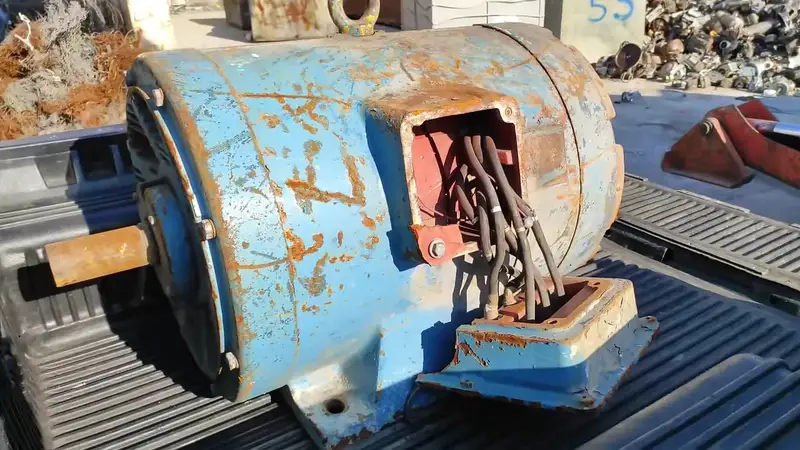
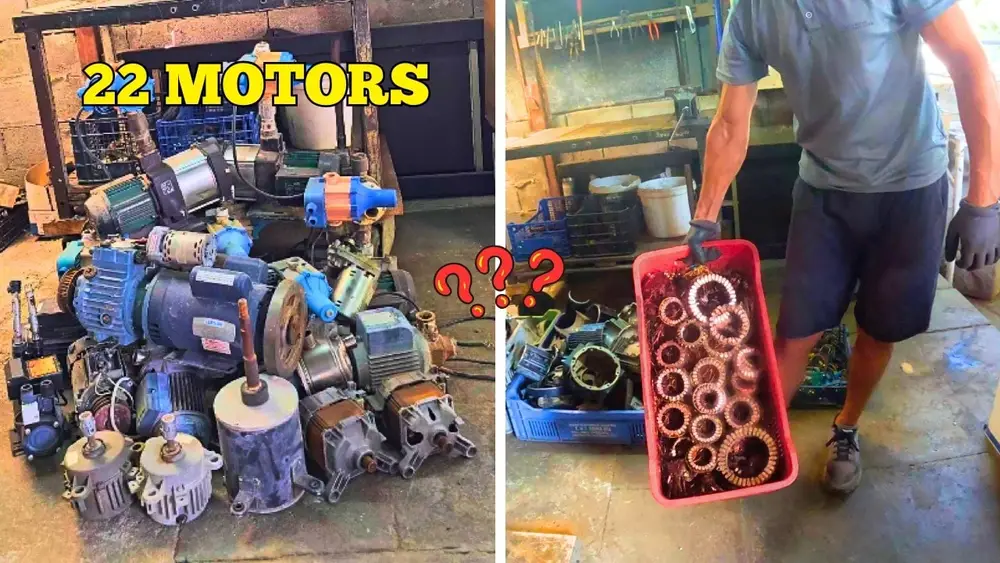
Most people see a pile of old electric motors and see heavy, dirty work with little payoff. I see an urban mining challenge. The question was simple: could I process 22 industrial electric motors fast enough to beat the average private sector hourly wage in the United States, roughly $37.50 per hour?
I tracked the labor from start to finish, separated every valuable material stream, and calculated the final scrap value using current yard rates. This was not about casually tearing down one motor. It was a production line test of whether organized manual motor scrapping can turn a pile of industrial waste into real value.
Table of Contents
- The Result: About $80 Per Hour in Scrap Value
- Stage 1: Tear Down the Motors at Production Speed
- Stage 2: Extract the Copper From the Stators
- The Scrap Metal Weigh In and Value Breakdown
- Is Manual Motor Scrapping a Real Side Hustle?
The Result: About $80 Per Hour in Scrap Value
The clock stopped at 4 hours and 8 minutes. The 22 motors produced $328.64 in total material value. Dividing the total value by the exact working time gave me an urban mining rate of approximately $80 per hour.
That is roughly $42 per hour above the $37.50 hourly benchmark. The key was not finding a magical motor or getting lucky with copper prices. The key was processing the whole batch with a strict system.

| Challenge metric | Result |
|---|---|
| Electric motors processed | 22 |
| Total labor time | 4 hours, 8 minutes |
| Total scrap value | $328.64 |
| Calculated hourly value | Approximately $80 per hour |
| Average wage benchmark | $37.50 per hour |
Stage 1: Tear Down the Motors at Production Speed
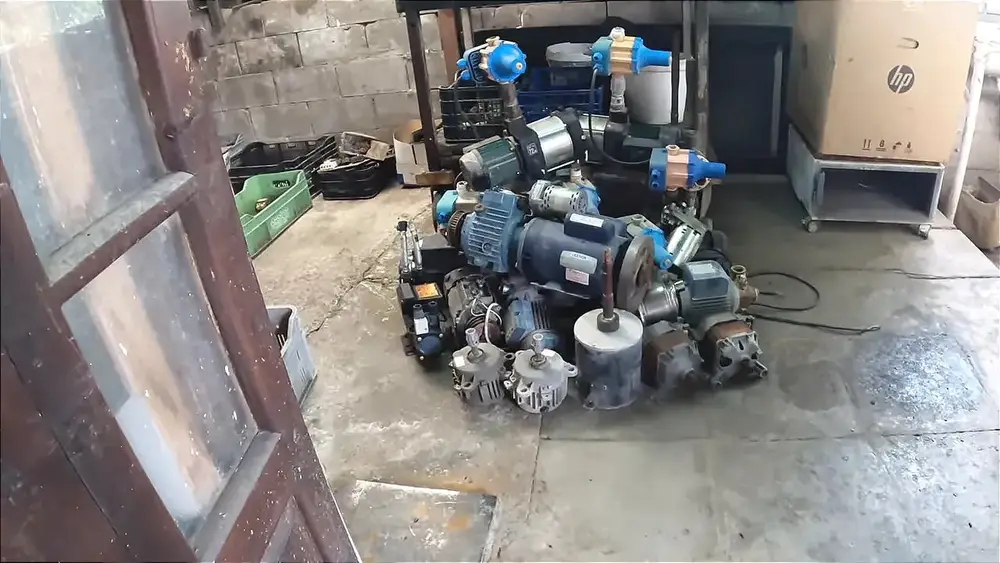
The first stage was all about getting each motor down to its bare stator without losing time. A seized bolt can wreck the economics of this kind of work. If one stubborn part eats up 15 minutes, the hourly rate drops fast.
That is why I relied on an impact drill instead of fighting fasteners by hand. The goal was consistent movement: open the motor, remove the usable components, sort the nonferrous metals, and get the copper stator onto the bench.
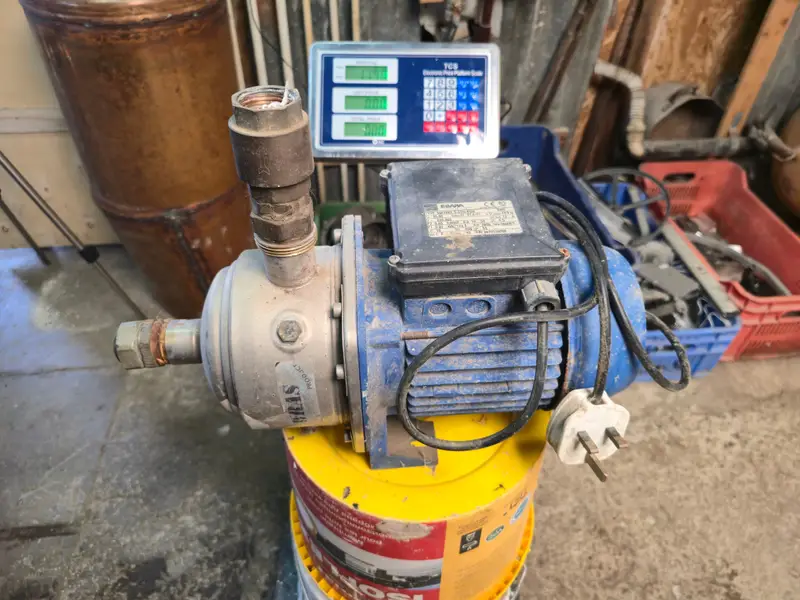
Some of these motors came from water pumps, and they held more than just copper. I recovered solid brass components and high grade aluminum casings alongside the steel rotors. Every material was kept separate because mixed scrap leaves money on the table.
After 2 hours and 50 minutes, stage one was complete. I had 22 bare copper stators ready for the extraction phase.
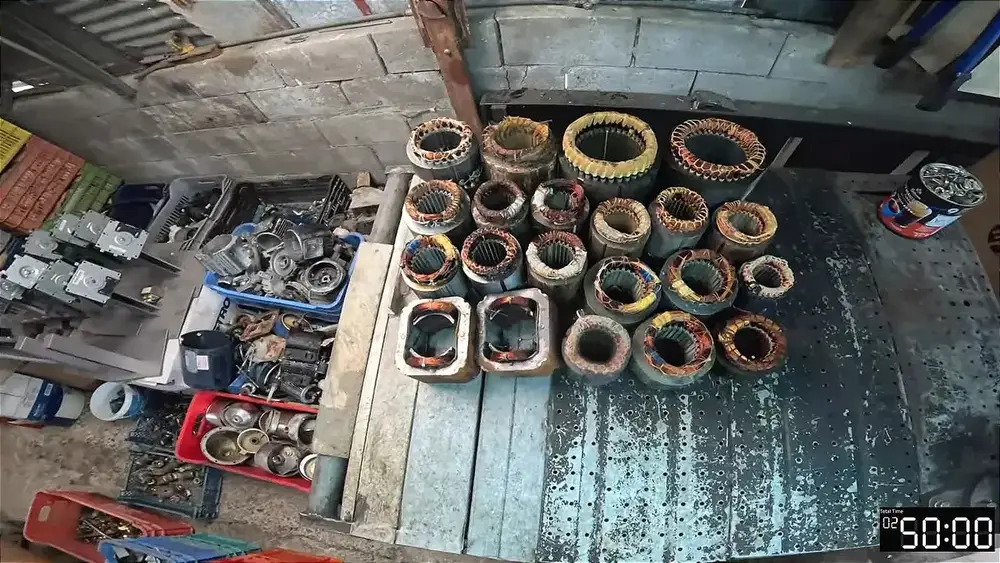
The Stage 1 principle: Avoid tool switching
In manual scrap metal recycling, production flow matters. I kept similar tasks together instead of fully finishing one motor before beginning the next. That reduced unnecessary tool changes and helped keep the pace up across the entire batch.
- Impact drill: speeds up fastener removal.
- Angle grinder: helps avoid long battles with seized bolts
- Material sorting: separates steel, aluminum, brass, wiring, and boards as the motors come apart.
- Batch workflow: keeps the workbench organized and prevents repeated setup time.
Stage 2: Extract the Copper From the Stators
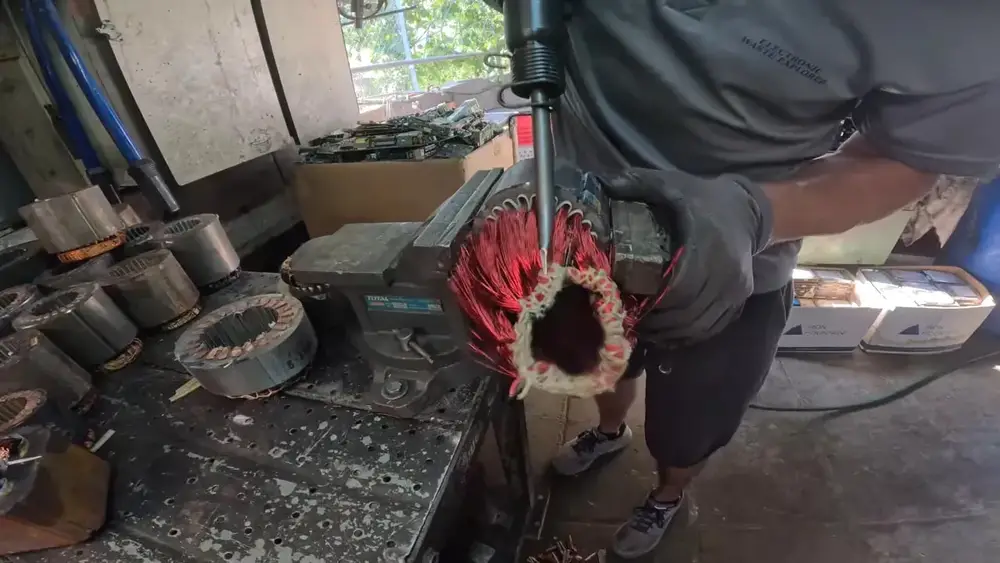
This is where the value really shows up. Motor stators are built to hold their windings tightly, so trying to free every strand with a hammer and chisel would be painfully slow. I used a two step approach instead.
First, the angle grinder cut the winding heads. Then the air hammer pushed the windings out of the stator slots. Once the copper was cut free, it came out far more efficiently than a hand only method.
The copper was thick, clean number two copper wire. That classification mattered because copper was by far the largest single value stream in the entire job. I processed the stators as one large batch, keeping the grinder work together and the extraction work together.
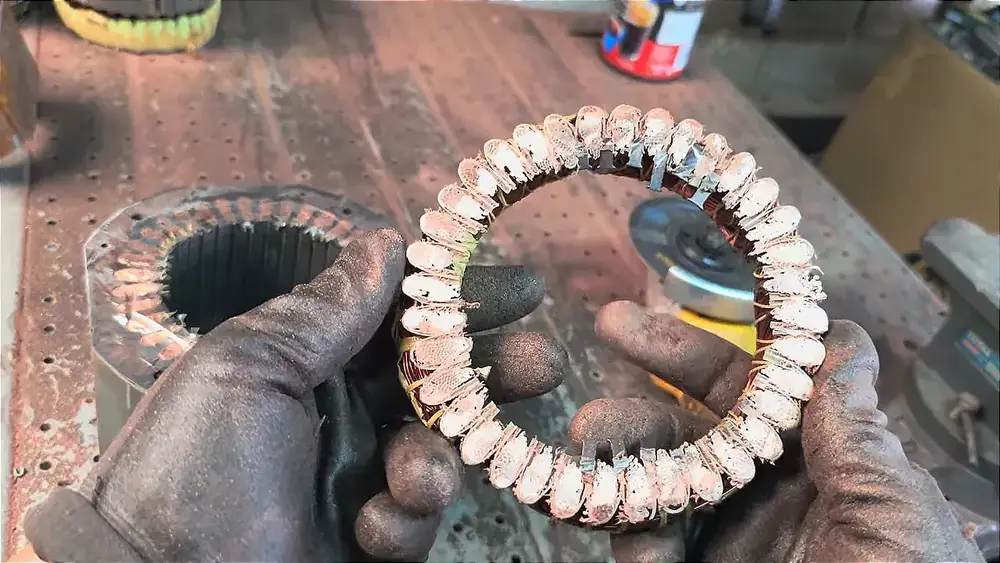
By stator number 15, the repetitive work was no joke. This is exactly why commercial scrap yards use industrial shredders worth millions of dollars. Machines do not tire, while a person eventually does. But with the right tools holding up and the workflow staying tight, manual processing still produced a serious result.
The Scrap Metal Weigh In and Value Breakdown
Once all 22 motors were processed, the material had to be weighed and valued separately. Copper led the way, but the steel, aluminum, brass, wires, motherboards, and stainless steel all contributed to the final payday.
| Material | Weight | Value |
|---|---|---|
| Clean number two copper | 35 lb | $192.50 |
| Steel | 282 lb | $45.12 |
| Brass | 12 lb | $38.40 |
| Aluminum | 52 lb | $30.16 |
| Stainless steel | 27 lb | $10.26 |
| Wires and motherboards | Combined | $12.20 |
| Total | All sorted materials | $328.64 |
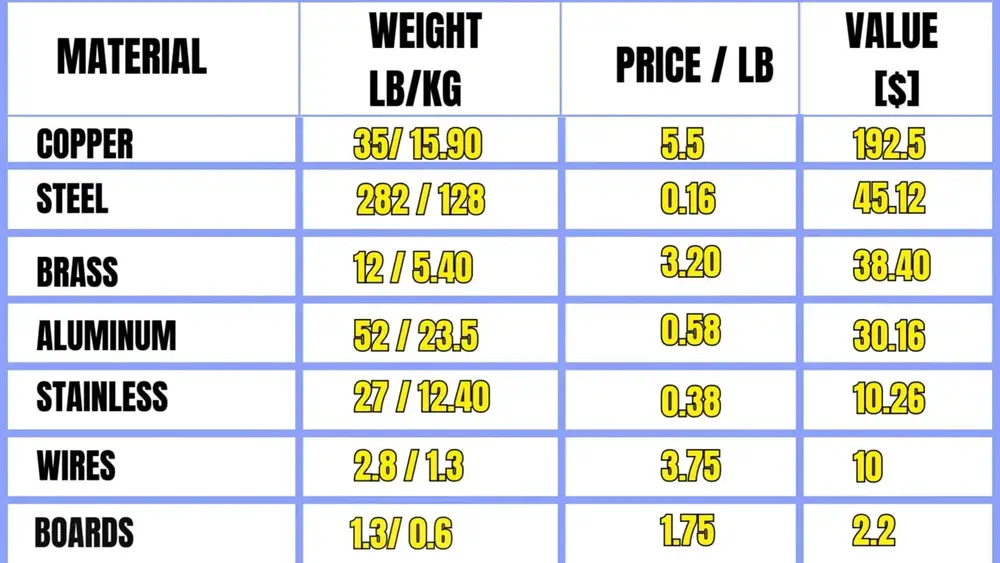
The copper alone accounted for $192.50. That is the lesson hiding inside every electric motor: do not judge the payout only by the outside housing. The bulky steel is part of the load, but the internal windings and nonferrous components are where the economics change.
Scrap prices move by region and by yard, so these figures are a real snapshot rather than a universal guarantee. I used current yard rates as my reference point. Before building a local calculation, check current scrap metal pricing with a recycler in your area.
Is Manual Motor Scrapping a Real Side Hustle?
For this batch, the answer was yes. Manual motor scrapping beat the hourly wage target by a wide margin. But I would not call it easy money. It is physical, repetitive work, and the profit depends on speed, tools, material quality, and local scrap prices.
The difference between a profitable operation and a frustrating pile of metal is discipline. The winning formula here was straightforward:
- Process enough motors to make batch work worthwhile.
- Use tools that eliminate slow manual steps.
- Sort every material stream instead of selling a mixed load.
- Track time honestly, because labor is the real test.
Urban mining is not just a hobby when it is approached like a production line. A pile of old motors can contain copper, brass, aluminum, steel, stainless steel, wires, and electronic boards. The opportunity is real, but so is the work required to unlock it.
For me, this challenge proved that the right system can turn industrial e-waste into a highly productive manual operation. The question is whether the physical grind is worth it for you at the prices available in your own area.
Frequently Asked Questions
How much copper came from the 22 electric motors?
I recovered 35 pounds of clean number two copper wire, valued at $192.50 using the yard rate applied in this challenge.
How long did it take to scrap 22 electric motors?
The complete teardown and copper extraction process took 4 hours and 8 minutes. Stage one, which reduced the motors to bare stators, took 2 hours and 50 minutes.
What tools made motor scrapping faster?
I used an impact drill for fast teardown, an angle grinder to cut winding heads, and a air hammer to push copper windings out of the stators.
Before tearing down another motor, use our scrap metal calculator to estimate the potential recoverable value and whether the processing time makes economic sense.