A transformer this big can look like a gold mine before the first bolt comes out. But looks do not pay the yard. Numbers do.
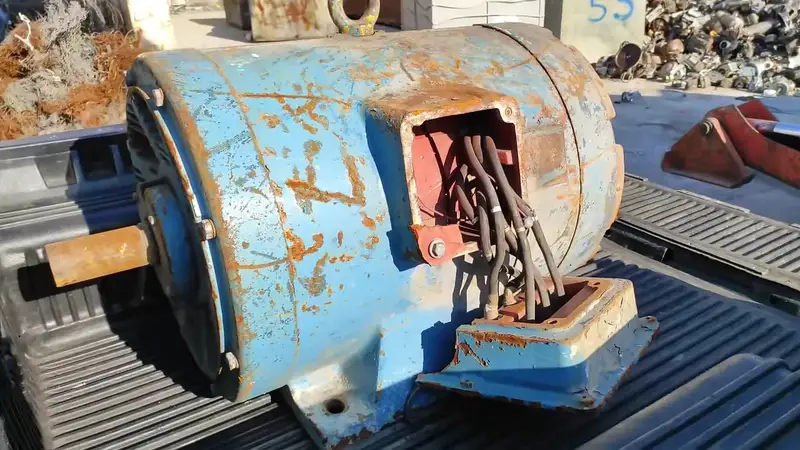
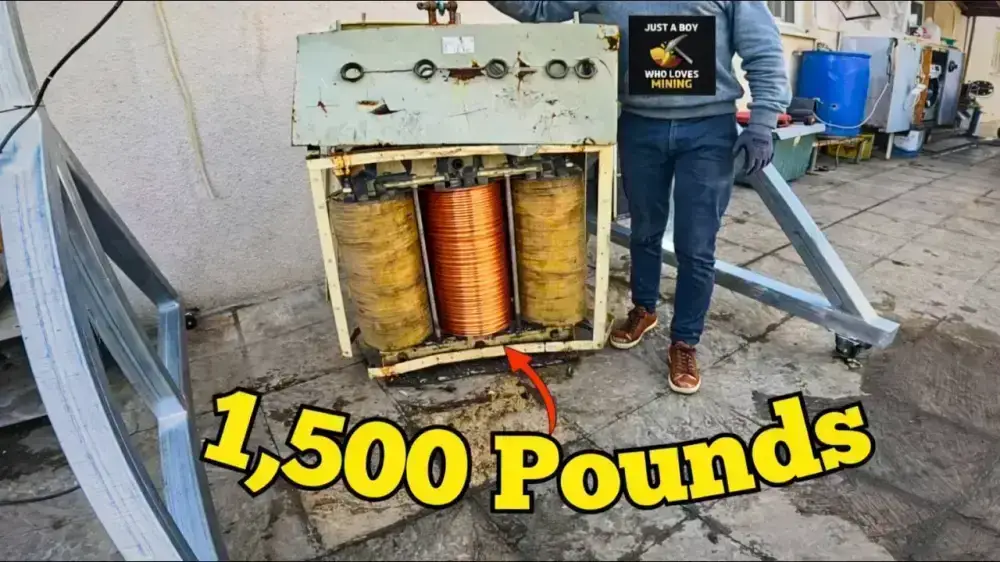
This industrial transformer weighed 1,425.5 pounds, and my mission was simple: establish the value of selling it whole, strip it down into separate metals, weigh every category, and see whether the extra work actually paid.
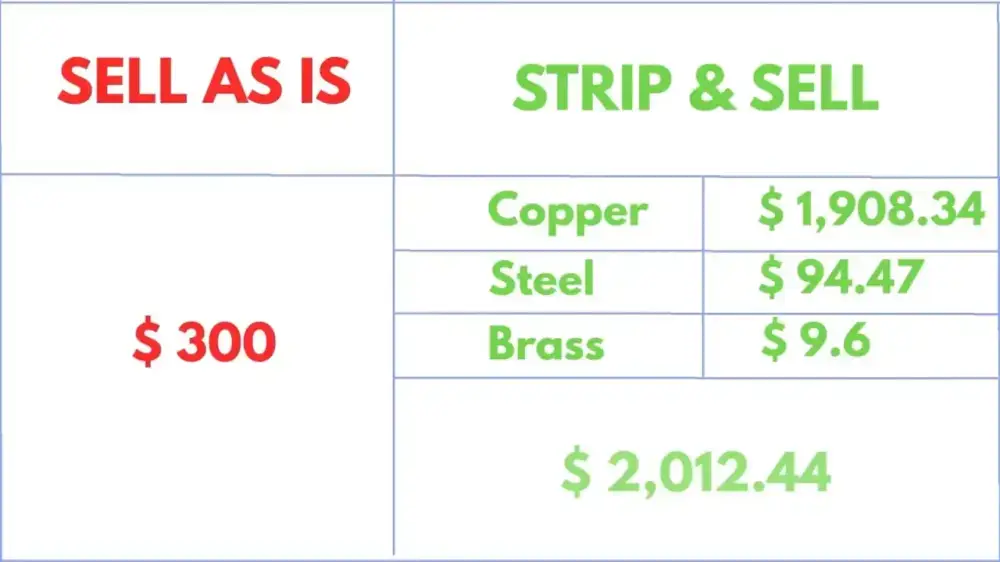
The final result was wild. Selling it as one complete copper transformer would have brought about $300. After six hours of teardown, the separated metal value came to $2,012.44 ( about 571% increase in profit).
Key Takeaways
- The 1,425.5 pounds transformer was worth about $300 when sold whole at $0.21 per pound.
- Teardown recovered 438.7 pounds of copper worth $1,908.34, plus steel and brass.
- The total separated scrap value reached $2,012.44 after roughly six hours of work.
- Always compare local whole unit pricing against likely metal recovery before dismantling a transformer.
Table of Contents
- Start With the No Work Value
- What Is Inside an Industrial Transformer?
- Bus Bars, Brass, and Nonmetallic Supports
- The Copper Windings Were the Whole Game
- Final Transformer Scrap Value Breakdown
- Was the Transformer Teardown Worth It?
- The Smart Scrapper’s Decision Framework
Start With the No Work Value
Before cutting, grinding, lifting, or taking on any risk, I always want a baseline. The best scrap decision is sometimes the one that requires no teardown at all.
I checked a real scrap yard price for whole copper transformers and found a rate of $0.21 per pound. At 1,425.5 pounds, the calculation looked like this:
| As is calculation | Amount |
|---|---|
| Transformer weight | 1,425.5 lb |
| Whole transformer rate | $0.21 per lb |
| Estimated sell as is value | $299.36, rounded to $300 |
That $300 number mattered for the entire project. If I could not beat it after labor, discs, handling, and sorting, then selling the transformer whole would have been the smarter move.
Scrap rates vary by location and by yard. Some yards classify a complete transformer at a specific transformer rate, while others may price it closer to light iron. Always call or check local prices before committing to a huge teardown.
What Is Inside an Industrial Transformer?
An industrial transformer does not generate electricity. It transfers energy between coils using electromagnetic induction, stepping voltage up or down according to its design.
For scrap purposes, I was looking for four things:
- Exterior steel housing: Panels, frames, bolts, plates, and covers.
- Laminated steel core: The dense magnetic steel stack at the center.
- Copper windings: The heavy coils where the real money was hiding.
- Bus bars and brass connectors: High current copper straps and smaller brass connection pieces.
The exterior came off first. It was mostly steel, but I saved the bolts and plates because every separated category adds up. The housing alone was heavy, and getting it out of the way exposed the bus bars, terminals, clamps, and windings.
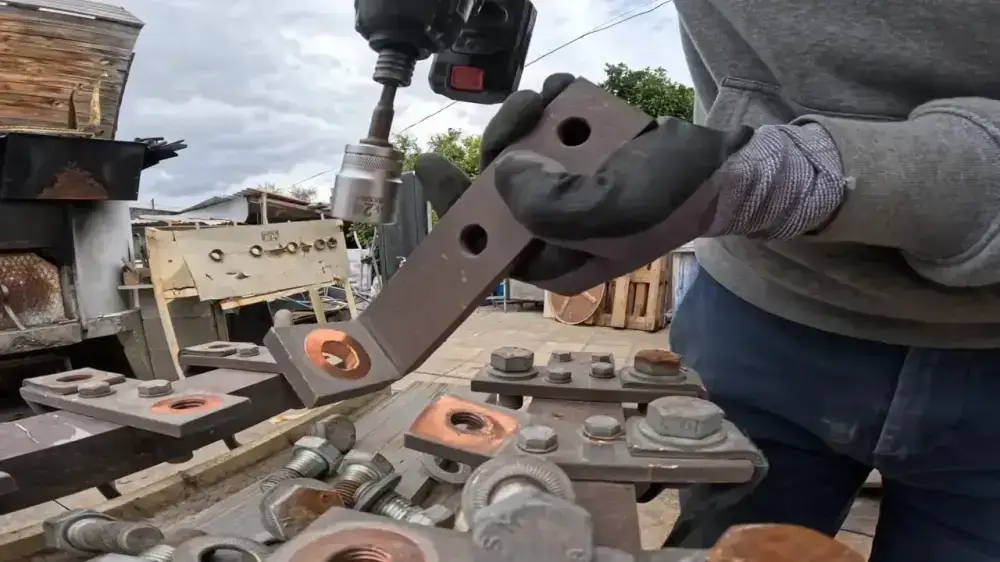
Bus Bars and Nonmetallic Supports
The flat heavy straps across the top were bus bars. In industrial equipment, bus bars carry hundreds or even thousands of amps continuously with low resistance and minimal energy loss. That is why they appear in transformers, switchgear, power panels, battery banks, and other high current equipment.
These straps can be copper, copper clad material, or connected through brass hardware. I removed the connectors carefully because brass may be a small category by weight, but it has a better price than steel.
Not everything inside is metal. The support insulators holding the bus bars were epoxy resin. These pieces are nonconductive and are used in medium and high-voltage transformers for their dielectric properties. They are not scrap value, but they matter when separating the material cleanly.
The Copper Windings Were the Whole Game
Once the clamps and structural pieces were out of the way, it was time for the big reveal: the windings.
Transformer windings can be heavy copper, copper clad aluminum, or aluminum. You never truly know what you have until you open it. These coils showed thick reddish copper, and they were built like tanks.
Removing them was not fast work. I cut through restraints and insulation, created space around the outside coils, and used a long pry bar to pull the massive winding sections free. The center coil became easier to manage once the outside sections were gone, but nothing about this was a casual job.
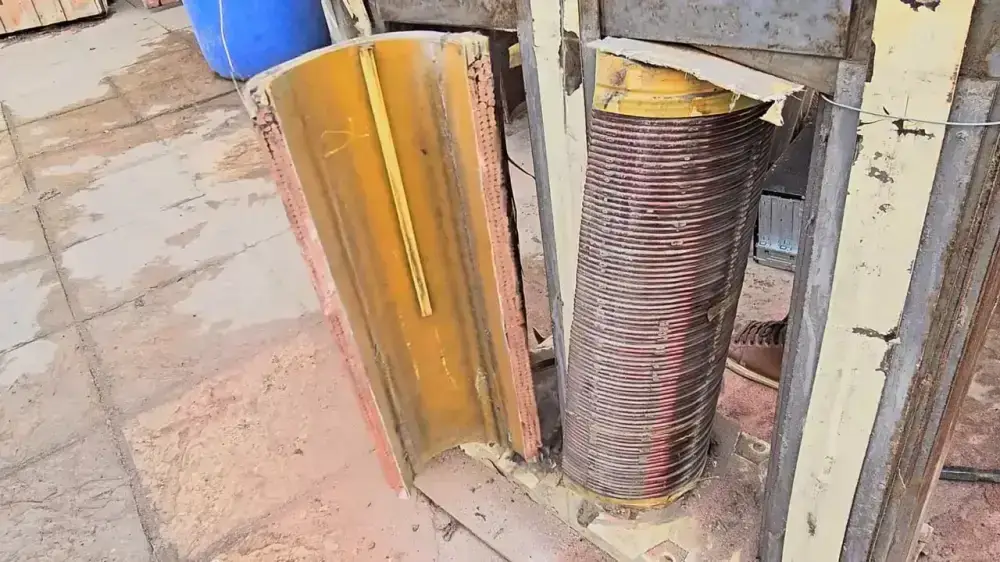
The coils were incredibly dense. That is the lesson with large industrial transformers: the giant steel shell makes them look heavy, but the copper inside can completely change the economics.
Final Transformer Scrap Value Breakdown
After all the cutting, separating, and hauling, I weighed each recoverable category individually. Here is the complete result.
| Material | Recovered weight | Rate used | Value |
|---|---|---|---|
| Copper windings and copper | 438.7 pounds | $4.35 per pound | $1,908.34 |
| Steel housing and laminated core | 944.7 pounds | $0.10 per pound | $94.47 |
| Brass | 3.5 pounds | $2.75 per pound | $9.62 |
| Total separated scrap value | 1,386.9 pounds | Mixed categories | $2,012.44 |
The steel total came from two parts: 134.7 pounds of exterior housing and light panels, plus an 810 pounds laminated steel core. The brass did not weigh much, but it still put another $9.62 into the pile.
Copper was the monster here. At 438.7 pound, the windings alone produced more than $1,900 in value. That is over six times the entire sell as is value of the transformer.
Was the Transformer Teardown Worth It?
Yes, on gross scrap value, this one was absolutely worth it.
| Decision | Gross return |
|---|---|
| Sell the transformer whole | $300.00 |
| Strip and sell separated metals | $2,012.44 |
| Additional gross value from teardown | $1,712.44 |
But this is where I keep it real. I spent approximately six hours dismantling the transformer and used three angle grinder discs (250 mm), costing about $9 total. The $2,012.44 is the material value, not an hourly wage calculation.
After subtracting the discs, the return was about $2,003.44 before accounting for my labor, transport, equipment, electricity, and any other operating costs. That is still a massive gap compared with $300 as is.
The Smart Scrapper’s Decision Framework
Would I tear down every transformer? No chance. A project like this only makes sense when the material, equipment, time, and local prices line up.
Before breaking down a large transformer, I would check these four points:
- Whole unit price: Get the local transformer rate first. That is your minimum target.
- Likely winding material: Copper changes everything. Aluminum or copper clad aluminum can change the decision fast.
- Tools and handling: This project required lifting equipment, cutting tools, pry bars, and a stable work area.
- Time versus return: Six hours can be worth it for a $1,700 plus increase in gross value. It may not be worth it for a small, low grade unit.
This transformer was a serious payday because the copper was massive, the steel was separated cleanly, and the final values crushed the $300 baseline. The lesson is simple: do not guess what is inside. Weigh it, price it, separate it, and let the numbers make the decision.
Stay safe, keep scrapping smart, and never underestimate a big ugly transformer with heavy coils inside.
Transformer Teardown FAQ
How much copper was recovered from this industrial transformer?
I recovered 438.7 lb of copper, valued at $1,908.34 using a copper price of $4.35 per lb.
What was the total scrap value of the transformer after teardown?
The separated copper, steel, and brass had a total gross scrap value of $2,012.44.
Was it better to sell this transformer whole or scrap it by material?
For this specific transformer, stripping it was far more valuable. The whole unit was worth about $300, while separated metals brought $2,012.44 before labor and other operating costs.
How long did the transformer teardown take?
The full dismantling process took approximately six hours and used three angle grinder discs (25 cm), costing about $9.
Before tearing down another transformer, use our scrap metal calculator to estimate the potential recoverable value and whether the processing time makes economic sense.